February 11, 2012

Hoylake Parish Church – St John’s Ambulance

hoylake-st-johns-ambulance

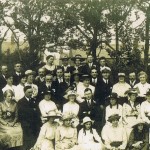
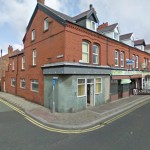
As many of you have been discussing the old Hoylake Parish Church this photo, kindly sent in by Keith Wallen, may well be of interest to you. It’s the Hoylake branch of St Johns Ambulance from 1963.

Back Row: L. – R.  Malcolm Studholme, Mike Farrell, Keith Wallen, George Sherlock, Mike Stanfield, John Bennett, Roger Bird.

Front Row : Gerald Smith, Edward (Teddy) Owen, Harry Turner & Mike Marriott.

The Royal Hotel

Many thanks to Joe Pinnington for allowing me to republish his interesting article about Hoylake, the Royal Liverpool Golf Club and the old Royal Hotel:

“What a ghastly building” retorted Peter Alliss as he walked in the direction of the 18th tee. He made this remark during the week of the Open championship in 1956.I accept that time does play tricks with the memory, and appreciating I was only 10 years old at the time, I am still convinced he uttered those words about The Royal Hotel.

In truth it was a ghastly building. Within a year it was to be razed to the ground and the housing complex we see today would rise from its ashes. But the history of the building, ah what a history.

It was the first Clubhouse of The Liverpool Golf Club in 1869 (the Royal followed in 1871).

The parties they had, the revelries and friendship, the characters from the local community! If ever a building had witnessed life this was it. But how on earth was this relic of the past situated in such a place? I shall endeavour to unravel the secrets of this pre Victorian pile.

In 1792 Sir John Stanley built the hotel, hoping to attract holiday makers to the new fad of sea bathing, which had become most popular on the South coast of England. His reason for choosing this location, apart from owning the land, was that we were in the middle of the Napoleonic wars and Hoylake was thought less likely to witness conflict from advancing hostile foreigners.

The roads in the early nineteenth century “were of frightful ruggedness”, according to Anna Seward of Litchfield who experienced the journey from Parkgate. However she must have enjoyed her stay as she returned 3 years later.

The setting in those far off days was spectacular. A long lawn sloping down to the sea, a sea uncontaminated and most suitable for bathing. This was the setting JMW. Turner the great artist used as inspiration for his sunsets. Oh!  And what sunsets. Witness them for yourself. They’re still there.

The bliss of those long summer days was interrupted somewhat by the introduction of a golf links on the warren, a warren sometimes used as a horse racing track. The golfers were a determined lot; progress was swift. How they negotiated the agreement with the landlord John Ball Senior (father of the great Golfer) is not recorded but a room was set aside for the members. I believe it is best to quote from Guy Farrer’s wonderful book about the club published in 1933.

The first mention was on 3rd July 1869 when “The Secretary was authorised to get boxes made for storing clubs and have them placed round the room engaged at the Royal Hotel, according to plans and estimates”.

In the picture of the Hotel, the Clubroom is the one to the right of the porch. The members used the dining room for meals. There was obviously a conflict between these wealthy Liverpool merchants and the local fishermen. A working relationship was established probably helped by the reverence and adoration the Blue jerseyed fishermen held for the golfing skills of Johnny Ball. “The greatest Roman of them all”.

The club now established, “there was great fun in the musical evenings in the bar parlour of the Royal Hotel. Bar parlour sounds quite ominous, but I never remember seeing a man in it who could not talk straight, nor walk straight out of it-and some of the golfers had great voices.

A certain RW (Pendulum) Brown sang the Farmers Boy whilst Thosper (Thomas Owen Potter) The Hon. Secretary, conducted with a beautiful ivory baton.  Now the Captains Wand of Office.

Matches were arranged for large sums of money during these evenings. John Ball Senior the owner of the hotel made his universal challenge “me and my son will play any two” a challenge that was seldom accepted.

On one occasion the afore mentioned Pendulum Brown backed himself to play the five holes round the out of bounds field, ”the Circus” in certain figures at dead of night. Not only did he win his bet but accomplished those holes in fewer strokes than he took the next day in broad daylight.

Alec Sinclair was a great humorist and George Dunlop was regarded as the best of after-dinner speech makers. Both Alec Sinclair and George Dunlop became Captains of the Club. As for dear old Pendulum he did not make the Captaincy. Perhaps something can be read into his nick name that is all I can presume.

From the long sloping lawn, members for a wager would play a shot over the Hotel onto the Home green (now the 17th) to see who could hit it closest to the flag. Legend has it that Harold Hilton was an expert at such a challenge, but more on that subject at a later date.

John Ball senior was not impressed with this activity, as the less skilful member would thin the ball into the Hotel. He did not hold back from reprimanding the offender.

When Johnny Ball won the Open in 1890 he was not only the first Englishman but also the first amateur to win the championship. On his way home by train word spread that there was a large welcoming party at Hoylake station. Some members were waiting for him together with a great gathering of the local fishermen who had a cart minus the horse ready to ride him home. Johnny, who loathed attention, alighted from the train before it arrived at Hoylake and walked home to The Royal Hotel along the shore. Climbing up the long lawn he was met by his father who proudly ushered him into the Hotel. One can presume that Johnny did not carry the Claret Jug but packed it in his suit case. With the benefit hindsight and a little imagination one can say that the first sight of the Claret Jug outside Scotland was in the Royal Hotel, where it remained for 12 months. Two years later Harold Hilton won the Open, again.  I presume the Claret Jug was on display in the Royal Hotel.

An agreement was eventually signed in 1879 between Mr.John Ball and the Club and an extension was built. A single storey that can be seen at the far end of the building.  The sum of £50 per annum was charged. In return the club stipulated their requirements including that “Mr Ball shall provide one thoroughly competent, efficient man servant to attend to the wants and requirements of the members of the said club”. Rather strong language but with the Victorians there was little chance of misunderstanding them. In the plan attached one will notice that there was no particular interest in washing facilities.

This agreement lasted for fifteen years but when the lease had expired and the Club had grown to such dimensions, further expansion was necessary, and a move was considered. The move to the present clubhouse took place in 1895. At the same time the lease of the links was also re negotiated with Lord Stanley. He must have been a busy man as he was at this time Governor General of Canada. As a by the by he gave his name to the Stanley Cup, the Ice Hockey competition still played for in North America.

This was one of the major events in the Club’s history. Was the move a natural progression?  Was it forced by the demands of John Ball Senior?

There is little doubt that the Club was expanding and a move would inevitably take place. However John Ball Senior was a hard man. He also had a great ally in Thomas Owen Potter who lived at the Hotel and of course was the Honorary Secretary up until the move.

Were his demands over zealous or was it a case of just pushing the members a little too hard?  We shall probably never know.

##

The Hotel still had another 60 years of trading. John Ball Senior died in 1902. His son Johnny the great golfer and daughter Elizabeth took charge but Elizabeth died in 1913 and Johnny married his house keeper Nellie and went to live in Wales.

The Royal Hotel very nearly housed Royalty. In 1929 King George V was strongly advised to spend more time by the sea due to an asthmatic condition. Hoylake was recommended but the Court at the time thought that Bognor in Sussex would be better suited for its proximity to London, consequently it was awarded the suffix of Regis. Pity, What an address; The Royal Hotel, Hoylake Regis. Marvellous.  Eh?

The Hotel survived as a public house, selling fine draught Ale and from all reports was open all hours. Ken Cranston the senior former England Cricket captain told me that in the forties players would climb under the fence at the 17th and nip into the Hotel for a pint of draught beer. The club only sold bottled beer at the time.

Between the Bar and the lounge Bar was a huge fire servicing both rooms. A great Arch housed the fireplace. It was about five feet high and one could see through to the other room. For a wager the more daring customer   would dive through the flames and somersault into the other room often interrupting a conversation as he fell to ground. Picking himself up he made his apologies. Explained that to accomplish the bet he had to make the return journey and promptly disappeared through the flames once more and out of sight.

Haunted? Was the Royal Hotel haunted? Well of course it was. In the years before the hotel closed, a number of the staff reported that a man dressed in a Brown Norfolk Jacket, Knickerbockers and a tweed cap had been seen walking down the corridor from the hall to the ballroom, and then vanish. When mounting the main staircase of the present clubhouse cast an eye upwards and see for yourself if there is a resemblance with the portrait of John Ball.

I am only grateful that the place was knocked down before I started calling at the Green Lodge a number of years later! Or am I?

We must be grateful that the club had a natural home to walk into. Without that perhaps the club with all the travelling difficulties would not have flourished so quickly. What effects would that have had on the development of the game in England?

One final thought. On that summer evening when you are playing to the 17th green, look over the houses to your right in the direction of the sea, witness for yourself   the setting sun, gently disappearing over the sloping lawn of the Royal Hotel.

Dr Browne of Hoylake

old houses 1

Many thanks to Ian Powers who captured the above row of big terraced houses that once stood on Market Street, to the left of St Lukes Church and now a large apartment block. Ian writes:

old-houses-2I photographed the ends of the block in 1999. I think it has now been demolished!

In the left hand hous was the Dentist’s surgery. (I think it was Kenworthy?).

In the right hand house which I believe was No.19 lived Dr Browne. He was my mother’s GP. By co-incidence, my mother spent the last years of her life there when the whole block was converted into to an old folk’s home.

I researched Dr Browne and found the following:

Dr Hablot John Moxon Browne. Born Feb 6 1869 died March 16th 1953. Registered as a Doctor 1 Aug 1892, he was sometime a house surgeon at Liverpool Royal Infirmary, then spent about 50 years as a doctor in Hoylake.

In Hoylake, Dr Browne was also an officer to the Children’s Day Nursery and was interested in paediatrics. Dr Browne’s father, also a doctor, helped set up the Liverpool ENT infirmary in Myrtle St. His grandfather was illustrator of Charles Dickens’ books under the pseudonym of “Phiz”.

I have checked some of the Medical Registers and have seen Dr Browne resident in No 19 Market St between 1911 and 1947.

How about you …anything to add?

Full T’ Brim

pool 1

Good to see that the model boating lake is still holding water!

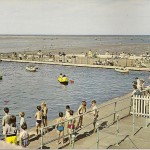
I’m only joking of course, the newly repaired boating lake should be fine for a few years yet. It’s currently just about as full as it could be – in fact I don’t think I’ve seen it so full. When it’s windy (that’ll be quite often then) the water in the lake can splash over the sides. Typically it’ll be the righthand side due to the prevailing westerly wind and the water pours into what was the kiddies splash pool part of the old outdoor pool:

splash pool

As it has rained heavily during the week the boating lake and the splash pool are pretty full. I have even seen people sailing model boats in the splash pool too. There is however, one particular reason why this splash pool won’t stay full of water for long:

cracked wall

Blooming Boat

flower boat

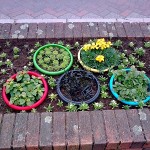
Thanks to Ian Davies (Hoylake RNLI) for sending in a photo of the boat that will be used for planting. Situated on the grass next to the lifeboat station the Hoylake In Bloom team (their latest news) will soon have this old dinghy looking blooming lovely.

Funnily enough, I took a photo of the boat myself on the day that Ian sent me the photo although the sack of soil hadn’t arrived at that point. As you can guess from the photo it wasn’t the nicest of days – the heavy raining making that area of open ground even more saturated.

Wouldn’t it be great if this area was better landscaped? It’s a great location offering lovely views all year round and I’d suggest it should really be one of Hoylake’s best public spaces. I know it’s a topic of discussion within Wirral Council,  so we’ll just have to watch this space.

I look forward to publishing another photo of the boat in the summer when the wind is light, the sun is shining and flower boat is in full bloom!

Another Hoylake Dairy

saughall dairy

Following on from the recent Ashfield Dairy photo Syd Bird has sent me this really old photo. Milk deliveries by horse and trap …and we buy ours in plastic jugs from the supermarket.

Apparently Saughall Dairy also operated out of Manor Road in Hoylake – perhaps they were subsequently replaced by Ashfield? I’ve no idea where this photo was taken …any suggestions?

Ashfield Farm Dairies

Ashfield Dairies

Many thanks to Kevin Radford who sent me the above photo of an old milk float belonging to the once Hoylake based Ashfield Farm Dairies. The road in view is Rudd Street and Kevin is on the left – his dad was having a tea break.

Kevin recalls that Ashfield Dairies were located toward the main road end of Manor Road. Express Dairies later took over Ashfield and moved to the Carr Lane. I’m guessing that the garage in Manor Road that is there today and pictured below used to be part of of the dairy. Am I right do you think?

The front:
garage-front

the rear from the entry:
garage-rear

An English Coney Island

I emailed myself a link ages that I’d forgotten all about until this evening. Somehow, I can’t remember now, I found an article in the free archives of the New York Times (official site) about Hoylake back in June 1883. You can read the archive in pdf (you’ll need a pdf reader if you haven’t got one) format by clicking here. Funny what you find on the internet :)

What Was This Ramp Used For?

Hoylake 1 - Carterton Road

Phil Quine has been in touch and has a query that perhaps one of you can answer? Whilst out for a walk recently, Phil took a couple of photos of this concrete ramp in Carterton Road on the Carr Lane estate. Coincidentally, my good mate Mike is the current occupant of the building at the top of the ramp – he runs his Wirral Vans business from there.

It’s my understanding that the ramp was once used by bin lorries – the lorries drove up and dumped their rubbish (in to what I’m not sure). But Phil wonders:

My belief is that it was used as an incline for railway wagons to dump their load either into lorries/carts or maybe into some sort of foundry? Having ‘Google Earthed’ the site, it would appear that the incline (ignoring the curve at the bottom obviously added in recent times) continues across Carr Lane and what appears to be a trackbed runs along the side one of one of the buildings on New Hall Lane. If you follow it on it then appears to cut across the 1939 Municipal Golf Course and joins the West Kirby line about half way between Hoylake and West Kirby

What more do you know? Please leave a comment and share your thoughts. And here is another photo for you, in case it helps:

Hoylake 2 - Carsgoe Road

Memorial Trees

memorial tree

Have you seen the tree outside The Row on Market Street decorated with lights? The tree pictured (not particularly well sorry – I must read my camera manual at some point) is the first of what will become three Memorial Trees. Jackie Hall has been in touch with more information:

This is the Tree we dedicated last year particularly to the memory John Chapman and also other Hoylake Residents who had passed away over the years.

A Memorial Book presented in memory of Ron Hall was placed in the Co-operative Funeralcare Office, behind the tree, for anyone to add a name at any time.

We are delighted to say that as a result of the fundraising efforts during the year we are now able to light the other two trees either side of this one.

Island Electrics have kindly agreed to carry out the work in the next two weeks and these lights will hopefully be lit from 5 p.m. to Midnight every night throughout the year. They are not part of the Christmas Lights.

We would be grateful for donations in memory of Residents, to complete the amount required, and paying in slips are available from Cooperative Funeralcare or Jackie Hall on 632 2152.

Additionally, have you noticed the small flower beds around each of the trees? These flower beds are maintained by local school children (Holy Trinity I think) and there have been notices on the trees asking dog owners not to allow their dogs onto these little gardening areas.